

Ointment Cream Lotion Plant & Equipment
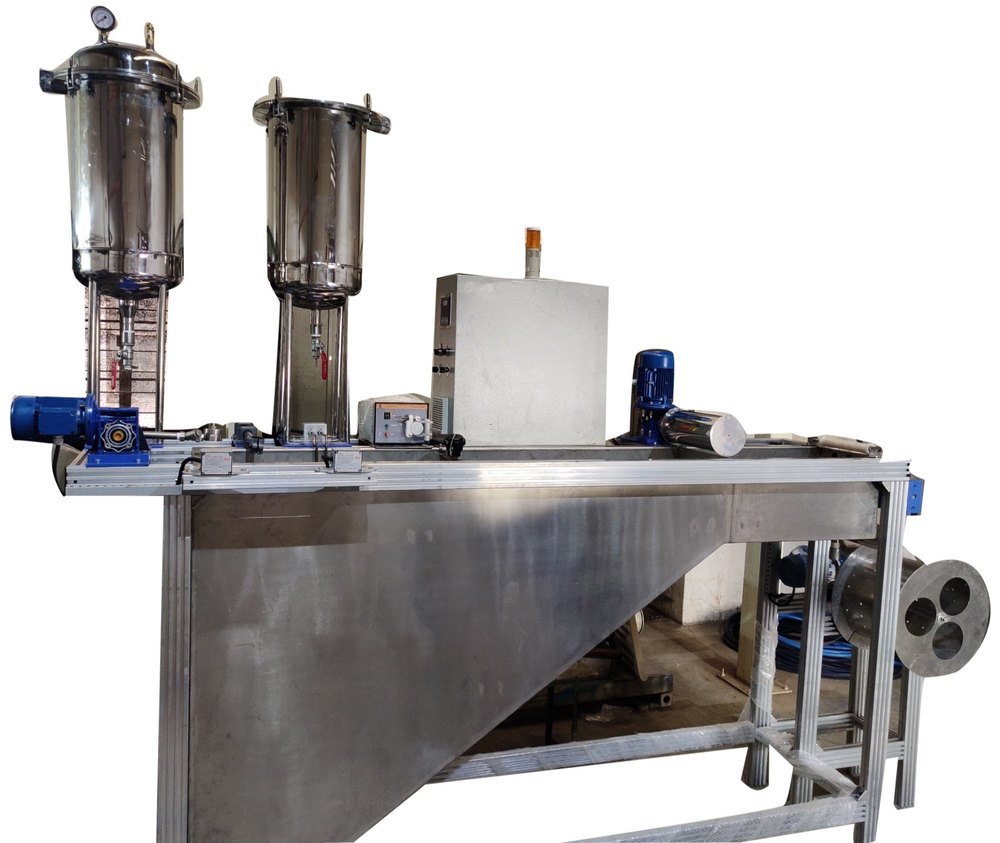
Produced by the precipitation or stretching of polymeric materials, membrane filters are commonly used in both industry and research. Properties of membrane filters vary widely with differences in composition, surface treatments, and pore size. Selecting the ideal filter requires an understanding of basic characteristics. We offer an extensive collection of Millipore® and Whatman™ membranes for filtration.
- Available in 152 mm & 293 mm size.
- Bubble test arrangement can be provided.
- MOC SS 316 L & mirror polish.
Chemical Compatibility
The filter material must be compatible with the chemical nature of the substance being filtered to avoid structural failure. The chemical compatibility of liquid samples is commonly focused solely on the liquid, but dissolved solutes could also interact with the membrane in an undesirable manner.
Wettability
For liquid filtration, the membrane must be wettable with the fluid being filtered, which is based upon the chemical properties of the membrane surface. Resistance can occur if the membrane is not wettable, causing back pressure and increasing the risk of membrane failure. Hydrophobic membranes can be wetted with alcohols (e.g., methanol) prior to use in the filtration of aqueous solutions.
Pore Size
For membrane filters, pore size provides an indication of largest pore diameter and can be related to the membrane’s ability to filter out particles of a certain size. As membrane pores can be non-uniform,
using the pore size rating alone is an unreliable measure of filter effectiveness. Bubble point and bacterial retention testing are two commonly used methods for measuring membrane pore size.
Flow Rate
Defined as the time required for the flow stream to pass through the filter, flow rate is critical in determining how rapidly a filtration can be completed. Flow rate generally decreases with smaller pore size,
but altering the membrane material, thickness, porosity, and pore architecture can all lead to differences in flow rate.